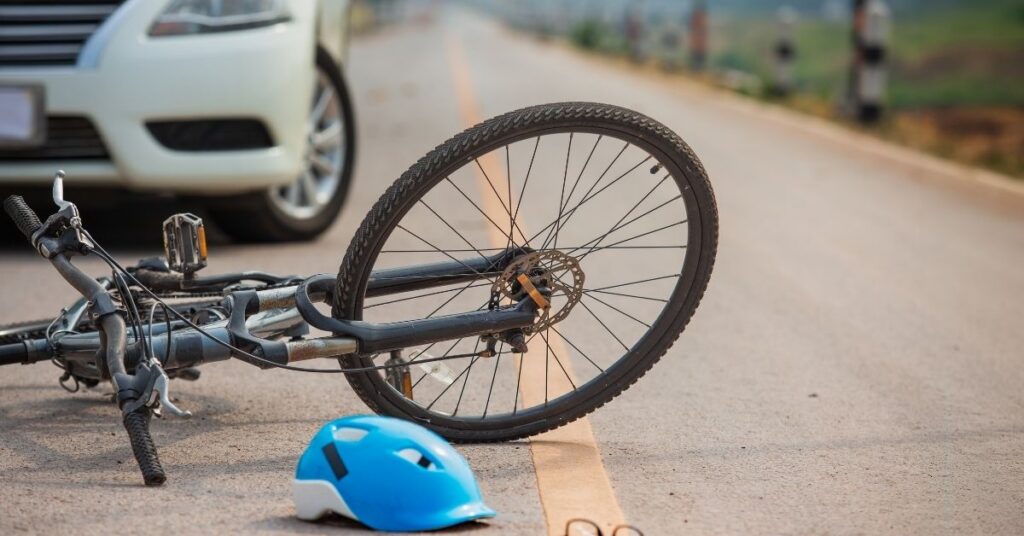
Bicycle accidents at intersections are some of the most dangerous crashes on California roads. Among the most common (and most misunderstood) are left-hook and right-hook bicycle collisions. These crashes often happen in seconds, but the injuries can be severe and the liability disputes intense.
Drivers frequently claim they “didn’t see” the cyclist. Insurance companies often argue shared fault. But California law provides clear rules about right-of-way, bike lanes, and driver responsibilities — and those rules matter greatly when determining who is legally responsible.
Here’s how left-hook and right-hook bicycle crashes happen, how fault is determined, and what injured cyclists should know about protecting their claims.
What Is a Left-Hook Bicycle Accident?
A left-hook accident occurs when:
- A cyclist is traveling straight through an intersection (often in a bike lane), and
- A motor vehicle turns left across the cyclist’s path, striking the rider head-on or from the side
These crashes typically happen when a driver:
- Misjudges the cyclist’s speed
- Fails to notice the cyclist entirely
- Tries to “beat” oncoming traffic
- Focuses on other vehicles instead of bike traffic
Left-hook collisions are especially dangerous because they often involve direct impact at intersections.
What Is a Right-Hook Bicycle Accident?
A right-hook accident occurs when:
- A cyclist is traveling straight, usually in a bike lane, and
- A motor vehicle passes the cyclist and then turns right, cutting directly across the bike’s path
Right-hook crashes are extremely common in urban areas and frequently occur when:
- Drivers fail to check mirrors or blind spots
- Drivers turn across bike lanes without yielding
- Cyclists are traveling at normal traffic speeds but are underestimated
These crashes often throw cyclists to the ground or into the vehicle, leading to serious injuries.
Why Bike Hook Crashes Are So Dangerous
Cyclists are vulnerable in hook collisions because:
- They have little protection
- The impact is often lateral or head-on
- Intersections involve multiple moving vehicles
- Drivers underestimate bicycle speed
Common injuries include:
- Traumatic brain injuries
- Facial fractures
- Broken collarbones and ribs
- Spinal injuries
- Road rash and soft tissue damage
- Internal injuries
Even when cyclists are wearing helmets, the forces involved can be catastrophic.
California Law and Bicycle Right-of-Way
California law treats bicycles as vehicles in most situations. Cyclists generally have the same rights and responsibilities as motorists.
Key legal principles include:
- Cyclists traveling straight generally have the right-of-way over turning vehicles
- Drivers must yield before turning across a bike lane
- Drivers must signal and ensure the movement can be made safely
- Bike lanes are not “optional” — they must be respected
A driver’s failure to yield is often the central factor in hook accident liability.
Who Is Usually at Fault in Left-Hook Crashes?
In most left-hook bicycle accidents, the turning driver is at fault.
Drivers are required to:
- Yield to oncoming traffic, including bicycles
- Judge speed and distance correctly
- Wait until the turn can be made safely
A common defense is that the cyclist was “going too fast.” But speed alone rarely eliminates driver responsibility — especially when the cyclist was traveling straight with the right-of-way.
Who Is Usually at Fault in Right-Hook Crashes?
In right-hook crashes, drivers frequently bear responsibility when they:
- Pass a cyclist and then turn immediately
- Fail to check mirrors or blind spots
- Turn across a bike lane without yielding
Drivers must merge into bike lanes safely before turning, or yield to cyclists proceeding straight. Simply signaling does not give a driver the right to cut off a cyclist.
When Fault May Be Shared
California follows a pure comparative negligence system. This means fault can be divided between parties.
Insurers often try to blame cyclists by claiming:
- The cyclist was riding too fast
- The cyclist was in a driver’s blind spot
- The cyclist should have slowed or stopped
- The cyclist wasn’t visible enough
However, cyclists are not required to anticipate illegal turns by drivers. Shared fault depends on evidence, not assumptions.
Evidence That Matters in Hook Bicycle Crashes
Strong evidence is crucial in bicycle accident cases.
Helpful evidence includes:
- Traffic camera footage
- Dash cam video
- Witness statements
- Police reports
- Intersection design diagrams
- Bike lane markings and signage
- Helmet damage and bike damage
Medical records showing the force and direction of impact also help establish how the crash occurred.
Common Insurance Tactics in Bicycle Hook Accidents
Insurance companies frequently:
- Claim the cyclist was “hard to see”
- Argue the cyclist should have yielded
- Minimize injuries by focusing on vehicle damage
- Push shared-fault arguments to reduce payouts
These tactics are common and often unfair, especially when cyclists were lawfully using bike lanes.
What Cyclists Should Do After a Bicycle Hook Accident
If you’re injured in a bicycle hook collision:
- Call police and request a report
- Document the intersection and lane markings
- Photograph vehicle positions and damage
- Identify witnesses immediately
- Seek medical care right away
- Avoid minimizing injuries
- Preserve your bicycle and helmet
- Avoid discussing fault with insurers
Early documentation often determines the strength of the case.
Frequently Asked Questions
Are cyclists required to stop for turning vehicles?
No. Cyclists traveling straight generally have the right-of-way.
What if the driver says they didn’t see me?
Failure to see a cyclist is not a defense if the cyclist was lawfully present.
Can I recover compensation if I wasn’t in a marked bike lane?
Yes. Cyclists are still protected under California law even outside designated lanes.
What if I was partially at fault?
You may still recover compensation, reduced by your percentage of fault.
Do helmets affect fault?
Helmet use may relate to injury severity, but it does not determine fault.
Getting Help After a Bike Hook Accident
Left-hook and right-hook bicycle accidents are not random; they are the predictable result of drivers failing to yield to cyclists traveling straight through intersections. California law places a strong duty on turning drivers to ensure their movements can be made safely.
Fault in these cases depends on evidence, not assumptions about cyclist behavior. With proper documentation and legal guidance, injured cyclists can hold negligent drivers accountable and pursue full compensation for their injuries.