
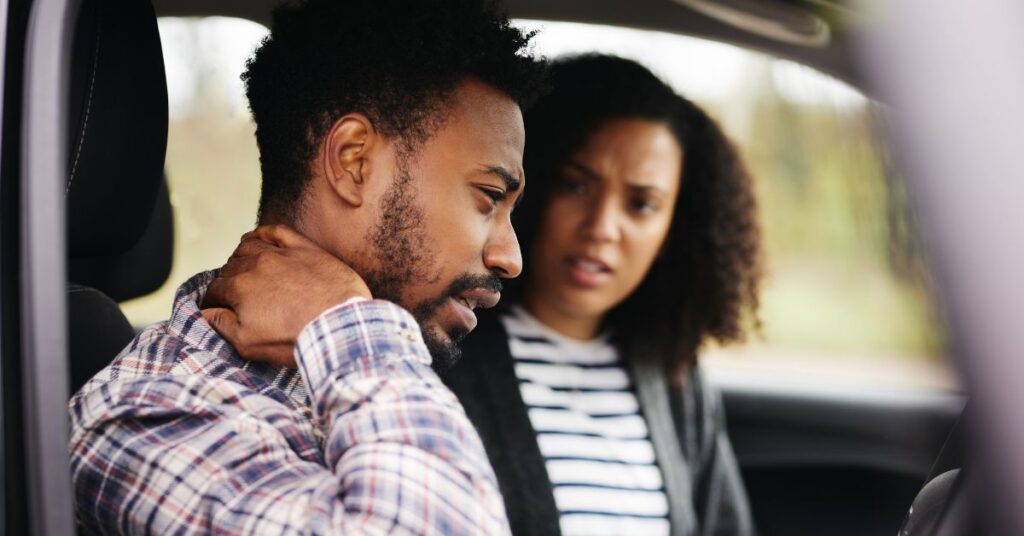
After a car accident, many people immediately look at their vehicle to assess the damage. If the bumper has only a small dent or there are few visible signs of impact, some assume they escaped injury. Others begin to worry that they will not have a valid personal injury claim because the accident “wasn’t serious enough.”
Unfortunately, insurance companies often encourage this type of thinking.
The reality is that in California, a lack of visible vehicle damage does not automatically mean you were not injured. People can experience legitimate and sometimes serious injuries even after relatively low-speed or low-impact collisions.
If you are experiencing pain after an accident, it is important to understand your rights and avoid assuming that the appearance of the vehicles determines the severity of your injuries.
Why Vehicle Damage and Injury Severity Are Not Always Connected
Many people believe that severe injuries only happen when vehicles are heavily damaged. While high-speed collisions certainly can cause catastrophic injuries, the relationship between vehicle damage and physical injury is not always straightforward.
Modern vehicles are designed to absorb impact and protect occupants. Features such as crumple zones, reinforced frames, and improved bumper systems can reduce visible damage while still transferring significant force to the body.
Even relatively minor impacts can cause rapid movement of the neck, back, shoulders, and spine.
For example, someone stopped at a red light who is struck from behind may experience a sudden jolt that causes the head and neck to move violently back and forth. Even if the vehicle itself appears relatively intact, the body may have experienced forces sufficient to cause injury.
Common Injuries Seen After Low-Impact Accidents
Some of the most frequently reported injuries after seemingly minor accidents involve soft tissues, muscles, and joints.
Whiplash is one of the most common examples. This injury occurs when the neck moves rapidly in opposing directions during impact, causing strain to muscles, tendons, and ligaments.
Other injuries may include:
- Neck pain and stiffness
- Lower back injuries
- Shoulder injuries
- Herniated discs
- Concussions
- Headaches
- Nerve irritation or numbness
Some people also develop symptoms gradually over time rather than immediately after the accident.
Because these injuries are often not visible externally, they can sometimes be underestimated by accident victims and insurance companies alike.
Delayed Symptoms Are Common
Many accident victims feel relatively normal immediately after a collision, only to notice increasing pain hours or days later.
Stress hormones and adrenaline released during an accident can temporarily mask pain. Once those effects wear off, symptoms may become more noticeable.
Someone who initially believes they are uninjured may wake up the next morning with neck stiffness, headaches, or back pain.
Delayed symptoms are common after California car accidents, which is why seeking prompt medical attention remains important even if you initially feel fine.
Waiting to see if symptoms improve can create both medical and legal challenges.
Why Insurance Companies Focus on Vehicle Damage
Insurance companies frequently use photographs of vehicle damage as part of their defense strategy.
In some cases, adjusters may argue:
- The impact was too minor to cause injury
- The vehicle damage was minimal
- Medical treatment was unnecessary
- Symptoms were caused by another condition
These arguments are often designed to reduce the value of claims or discourage people from pursuing compensation altogether.
However, California personal injury law does not require major vehicle damage before someone can recover compensation.
The legal question is not whether the bumper was crushed or whether the car was totaled. The question is whether another person’s negligence caused injuries and damages.
Medical Evidence Often Matters More Than Vehicle Damage
In low-impact accident cases, medical records often become one of the most important forms of evidence.
Prompt medical evaluation can establish:
- When symptoms began
- The type of injuries sustained
- Recommended treatment
- Whether the injuries are consistent with the accident
Doctors may also document physical limitations, pain levels, and changes in mobility.
This evidence can help counter insurance arguments that injuries were exaggerated or unrelated to the collision.
Consistent follow-up care can also strengthen a claim.
California Comparative Negligence Rules May Still Apply
California follows a pure comparative negligence system. Under this approach, multiple parties can potentially share responsibility for an accident.
Even if an injured person is partially at fault, they may still recover compensation, although their recovery could be reduced by their percentage of responsibility.
Insurance companies sometimes use low-impact accidents to argue that victims are exaggerating symptoms or that pre-existing conditions are entirely responsible for their complaints.
Because these arguments can affect settlement negotiations, it is important to build a strong factual and medical record early.
Common Mistakes People Make After a Minor Accident
One of the biggest mistakes people make is assuming they do not need medical care because the accident seemed minor.
Other common mistakes include:
- Delaying treatment
- Ignoring symptoms
- Giving recorded statements too quickly
- Posting accident details on social media
- Accepting early settlement offers
A quick settlement may seem attractive, especially if property damage appears minimal. However, symptoms sometimes worsen over time, and accepting compensation too early can limit your ability to recover additional damages later.
Why Legal Guidance Can Help
Cases involving limited vehicle damage can become more heavily disputed than people expect.
Insurance companies know juries and accident victims sometimes assume bigger vehicle damage equals bigger injuries. Because of this, insurers often challenge low-impact injury claims aggressively.
An experienced California personal injury attorney can help investigate the accident, gather medical evidence, consult with experts when necessary, and advocate for fair compensation.
Legal representation can also help prevent insurance companies from minimizing legitimate injuries simply because the damage to a vehicle appears small.
Speak With a California Personal Injury Attorney
Just because your vehicle does not appear heavily damaged does not mean you escaped injury. Low-impact accidents can still cause serious physical pain, medical expenses, and long-term complications.
At Vititoe Law Group, we understand how insurance companies evaluate and challenge injury claims involving minimal vehicle damage. Our team can help assess your situation, preserve important evidence, and pursue compensation for the injuries and losses you have experienced.
If you were injured in a California car accident, contact Vititoe Law Group today to schedule a consultation.