
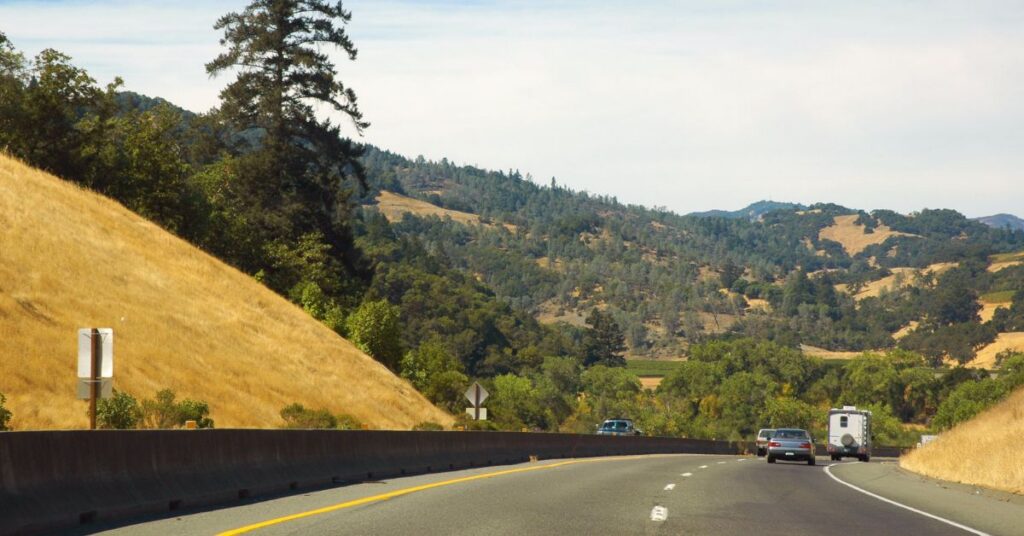
U.S. Highway 101 is one of the most important transportation corridors through the Conejo Valley, connecting communities including Westlake Village and Thousand Oaks with the greater Los Angeles area and the rest of Ventura County.
For thousands of local residents, traveling the 101 is simply part of everyday life.
The combination of commuter traffic, freeway speeds, merging vehicles, commercial trucks, motorcycles, and congestion can also create complicated accident scenarios.
When a collision happens on Highway 101, determining responsibility may involve much more than deciding which driver struck another vehicle first. Multi-vehicle impacts, sudden traffic slowdowns, lane changes, commercial vehicles, and conflicting accounts can all make these cases difficult to unravel.
For people injured in serious crashes along the 101, understanding how the collision happened is often the first step toward determining who may be responsible.
Heavy Commuter Traffic Creates Changing Conditions
Traffic conditions on Highway 101 can change dramatically during a single trip.
Vehicles may be traveling at freeway speeds before suddenly encountering congestion. Drivers who are not paying close attention may have only seconds to recognize that traffic ahead has slowed or stopped.
That creates a risk of rear-end and chain-reaction collisions.
A driver who is following too closely may be unable to stop in time. A distracted driver may not recognize brake lights ahead. Another motorist may attempt a sudden lane change to avoid slowing traffic.
When several of these actions occur at once, a single mistake can quickly involve multiple vehicles.
Merging and Lane Changes Can Lead to Disputes About Fault
Highway 101 contains numerous entrances, exits, and areas where drivers need to merge with existing freeway traffic.
Merging safely requires awareness from everyone involved.
A driver entering the freeway may need to adjust speed to match traffic, while drivers already on the highway must remain aware of vehicles entering nearby.
Problems can occur when someone merges abruptly, fails to check a blind spot, changes multiple lanes at once, or attempts to reach an exit at the last moment.
After an accident, drivers may give very different accounts of what happened.
One driver may say another vehicle cut them off. The other may argue that there was adequate space to merge.
Physical evidence, vehicle damage, witness accounts, and video footage can become particularly important when the drivers disagree.
Sudden Traffic Slowdowns Can Cause Chain-Reaction Crashes
A multi-vehicle accident may happen within seconds but take much longer to reconstruct.
Imagine traffic suddenly slowing on the 101.
One vehicle stops safely. The vehicle behind it brakes too late and causes a collision. A third vehicle then strikes the second car, potentially pushing it forward again.
Which driver caused which injuries?
The answer may not be obvious.
A person can potentially experience more than one impact during a chain-reaction collision. Determining the sequence of those impacts may require examining vehicle damage, witness statements, dashcam footage, roadway evidence, and other information.
California Allows Fault to Be Divided Among Multiple Parties
Highway accidents do not always have a single responsible driver.
California follows a pure comparative negligence system, meaning fault can potentially be allocated among multiple people.
For example, one driver may make an unsafe lane change while another is speeding. A third driver may be following too closely and unable to avoid the resulting collision.
Each person’s actions may need to be evaluated.
This can become particularly important in serious accidents where several drivers and insurance companies are involved.
Commercial Trucks Add Another Layer of Complexity
Highway 101 is not used only by passenger vehicles.
Commercial trucks, delivery vehicles, company vehicles, buses, and other business-related traffic also travel through the Conejo Valley.
When a commercial vehicle causes or contributes to a collision, the driver’s employer or another company may potentially become relevant.
Questions may arise about whether the driver was working at the time, whether the vehicle had been properly maintained, or whether a business’s actions contributed to the accident.
Commercial vehicles may also generate evidence that is not typically available in an ordinary passenger-car accident, including company records, maintenance documentation, dispatch information, and certain electronic data.
Identifying and preserving this information can be important.
Motorcycles Face Particular Risks on Highway 101
Southern California’s climate allows motorcyclists to use local roads throughout much of the year.
Freeway riding can expose motorcyclists to dangers created by sudden lane changes, blind spots, congestion, and drivers who fail to recognize a motorcycle nearby.
The consequences can be severe.
Motorcyclists lack the physical protection provided by a passenger vehicle. A collision that causes relatively limited damage to a car may result in catastrophic injuries to a rider.
Drivers should therefore check mirrors and blind spots carefully before changing lanes, particularly in heavy freeway traffic.
Speed Can Affect Both Reaction Time and Injury Severity
Highway driving naturally involves higher speeds than most neighborhood streets.
That makes maintaining adequate following distance and attention particularly important.
The faster a vehicle is moving, the more distance it generally needs to stop. A driver who is distracted for even a few seconds can travel a substantial distance before recognizing a hazard.
Higher-speed impacts can also produce more serious injuries.
Victims of freeway accidents may suffer traumatic brain injuries, spinal injuries, fractures, internal injuries, and other conditions requiring significant medical treatment.
Distracted Driving Can Be Especially Dangerous on the Freeway
Freeway driving requires drivers to continually monitor surrounding traffic.
Phones, navigation systems, food, passengers, and other distractions can take attention away from the road.
A driver may look down briefly and fail to notice that traffic has slowed.
Even hands-free activities can reduce a driver’s awareness of surrounding conditions.
After a serious collision, phone records or other electronic evidence may sometimes become relevant when there is reason to believe distracted driving contributed to the crash.
Road Conditions Can Also Affect an Accident
Not every Highway 101 collision is caused exclusively by driver behavior.
Road debris, construction zones, poor visibility, damaged pavement, or other roadway conditions may contribute to an accident.
A driver may swerve to avoid an object and collide with another vehicle. Construction can create temporary lane patterns that require drivers to react quickly. Weather can also affect traction and visibility.
Determining whether a roadway condition played a role does not necessarily eliminate driver responsibility.
Instead, investigators may need to determine whether several factors contributed to the collision.
Dashcams and Other Video Evidence Can Be Valuable
Highway accidents often happen too quickly for witnesses to remember every detail accurately.
Video can provide a clearer picture.
Dashcams may capture lane changes, traffic conditions, braking, or the moments immediately before impact.
Nearby businesses or transportation infrastructure may also have cameras, depending on the location.
When video exists, preserving it promptly can be important because some systems automatically overwrite footage.
Vehicle Data May Help Reconstruct a Serious Crash
Modern vehicles can contain electronic information that may assist in investigating certain collisions.
Depending on the vehicle and circumstances, available data may help experts understand factors such as speed, braking, or other vehicle activity shortly before an impact.
Physical evidence remains important as well.
Vehicle damage, tire marks, debris patterns, final vehicle positions, and other evidence can help accident reconstruction professionals evaluate how a collision occurred.
This can be particularly useful when multiple drivers provide conflicting versions of events.
Serious Freeway Injuries Can Have Long-Term Effects
The consequences of a Highway 101 accident may continue long after the vehicles are removed from the roadway.
An injured person may require surgery, rehabilitation, physical therapy, or ongoing medical treatment.
Some people are unable to return to work for weeks or months. Severe injuries may permanently affect a person’s ability to perform their previous occupation.
A personal injury claim may potentially seek compensation for medical expenses, future treatment, lost income, diminished earning capacity, pain and suffering, and other losses depending on the circumstances.
Understanding the long-term medical outlook can therefore be important before resolving an insurance claim.
Speak With a Conejo Valley Personal Injury Attorney
Highway 101 is an essential part of daily life for many people in Westlake Village, Thousand Oaks, and the surrounding Conejo Valley. When a serious collision occurs, however, freeway speeds, multiple vehicles, commercial traffic, and conflicting accounts can make determining responsibility difficult.
At Vititoe Law Group, we help people injured in Southern California investigate serious motor vehicle accidents and determine who may be responsible.
If you or a loved one has been injured in an accident on Highway 101 in Westlake Village, Thousand Oaks, the Conejo Valley, or elsewhere in Ventura County, contact Vititoe Law Group today to schedule a consultation and learn more about your legal options.